How to build confidence before an interview
Confidence in interviews isn’t a personality trait. It’s a state you can build deliberately, in 60 minutes, before the meeting starts. Here’s the routine that works.
Universal answers and methodology for any interview.
Confidence in interviews isn’t a personality trait. It’s a state you can build deliberately, in 60 minutes, before the meeting starts. Here’s the routine that works.
Rambling is the single most common technical problem in interviews. It’s also one of the most fixable. Here’s why it happens, the three places it starts, and the 90-second rule that stops it.
If you’ve been interviewing for months and keep getting “we went with another candidate,” you’re not unlucky. You’re stuck in the most diagnosable pattern in job searching. Here are the four reasons it’s happening.
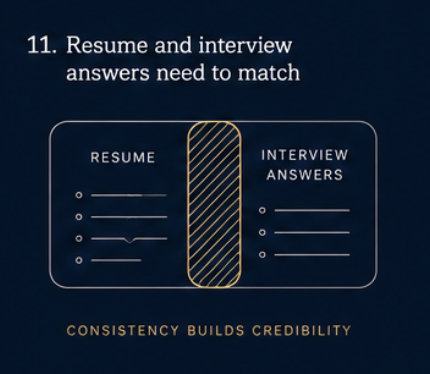
The fastest red flag in any interview is when your story doesn’t match your resume. Most candidates don’t realize this is happening. Here’s the 30-minute audit that prevents it.
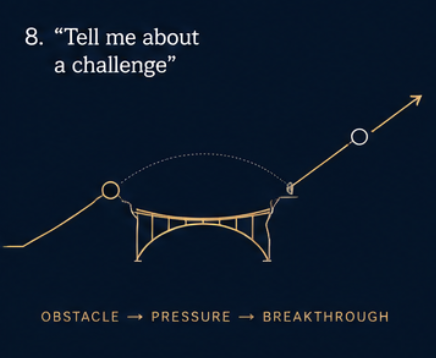
Interviewers don’t evaluate the challenge itself — they evaluate three things about it. Here’s the right size of challenge to pick, the “actually did” trap to avoid, and how to frame a failed initiative as a win.
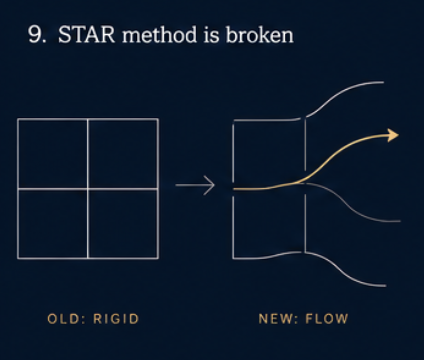
STAR was the gold standard for behavioral interviewing in 2005. It produces robotic answers in 2026. Here’s the replacement framework: Stakes, Friction, Action, What Changed.
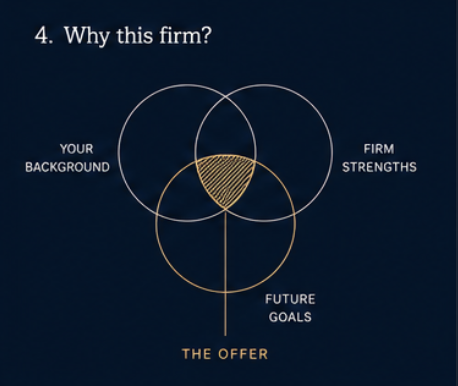
The “why this firm” question is the easiest interview question to nail and the easiest one to blow. Here’s the two-part template that actually works.
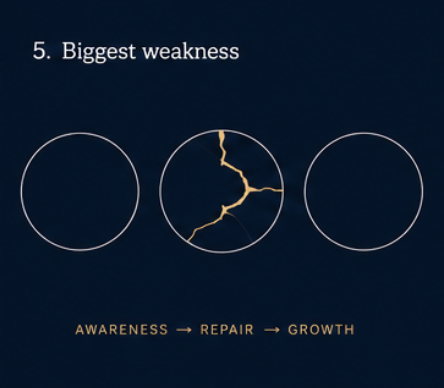
Most candidates default to a humblebrag or a manufactured weakness. Here’s the three-part formula for an answer that actually lands.
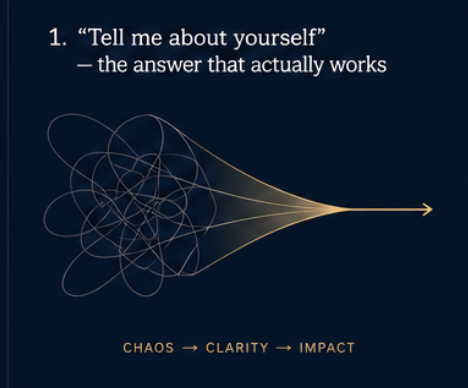
Most candidates blow the first 30 seconds of every interview. Here’s the three-sentence answer to “tell me about yourself” that actually works.
The opener that decides every interview. A two-minute, three-beat framework I teach every coaching client, plus the four mistakes that kill weak answers.